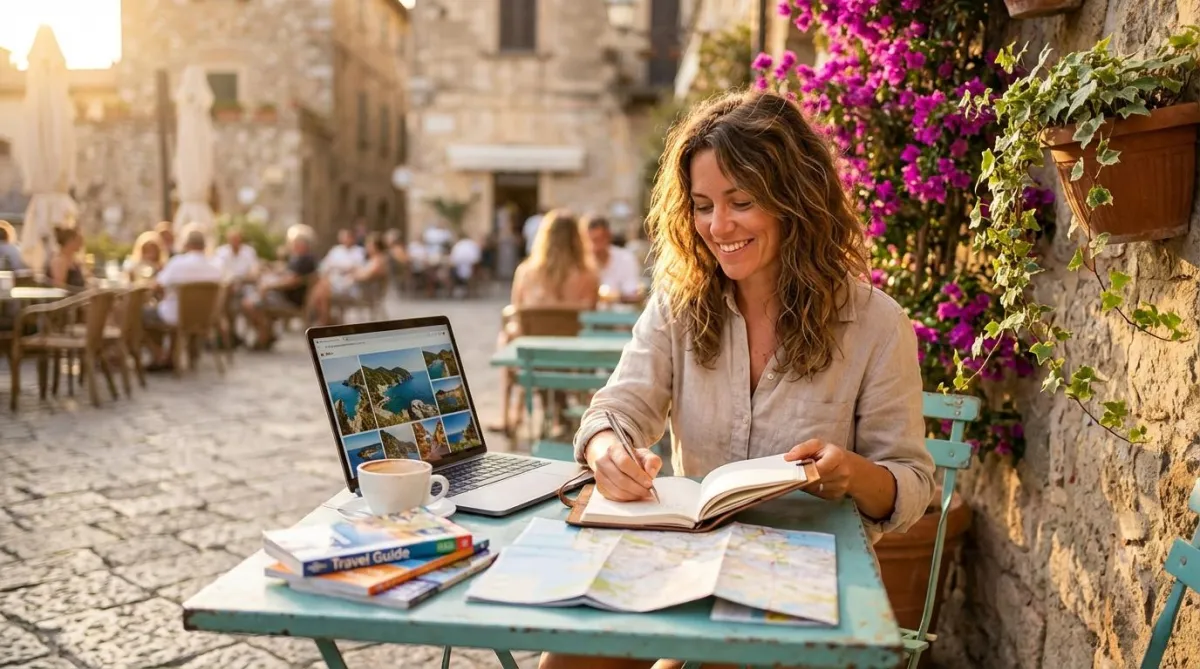
How to Plan a Solo Trip Without Losing Your Mind (Or Your Passport)
You know that moment when you're scrolling through Instagram, seeing yet another friend post from a group vacation, and you think, "I wish I could just go somewhere... by myself"?
And then—boom—the panic sets in. How do you evenstartplanning a solo trip? Do you just... book a flight and wing it? What if you forget something crucial? What if you end up stranded in an airport at 2 AM with no accommodation because you didn't plan properly?
Here's the thing: planning a solo adventure doesn't have to feel like preparing for a Mars mission. But it also shouldn't be a hot mess of last-minute panic bookings and forgotten travel insurance (speaking from experience here—don't be me).
Can I be honest with you? The difference between a solo trip that feels like a disaster movie and one that becomes your favorite story isn't luck. It's having a flexible plan that gives you structure without strangling your spontaneity.
Let me tell you why this matters.
Here's Where Most People Get It Wrong
We've all heard the romantic version: throw a dart at a map, book the cheapest flight, and let the universe guide you. That sounds dreamy, right?
But here's what actually happens when you skip the planning phase: you arrive exhausted, realize your accommodation is in a sketchy neighborhood, spend three hours figuring out public transport, and end up eating overpriced tourist-trap food because you're too drained to explore.
Sound familiar?
The beautiful truth about solo travel is this: a little planning creates thefreedomyou're craving. When you know your accommodation is safe, your documents are sorted, and you've got a loose itinerary in your back pocket, you can actually relax into those magical spontaneous moments everyone raves about.
It's like this—you're not building a rigid schedule. You're building a safety net that lets you fly.
The Sweet Spot: Structure Meets Serendipity

Let's talk about what actually works when you're planning a solo trip. And no, I'm not going to tell you to create a color-coded spreadsheet for every meal (unless that's your jam—you do you).
Here's what I've learned: the best solo trips have anchor points—those must-see experiences or pre-booked activities that give your days shape—and white space—unscheduled time where the magic happens.
Think of it like jazz music. You need the melody (your plan), but the improvisation (spontaneity) is what makes it memorable.
For example, maybe you pre-book that cooking class in Bangkok or that sunset hike in Portugal. Those are your anchors. But you also leave entire afternoons free to wander, get lost, stumble into a hidden café, or join a group of travelers you met at your hostel.
When you're planning solo, you get to design the trip aroundyourenergy levels. Morning person? Stack your adventures before noon. Night owl? Save the magic for evening wanderings through lit-up streets. You don't have to compromise with anyone—and honestly? That's where the real freedom lives.
Let's Talk About the Money Thing
Okay, real talk: solo travel can be more expensive than traveling with friends. That dreaded "single supplement" charge exists, and yes, it's annoying. But don't let that scare you off.
Here's the good news: when you're solo, you havecompletecontrol over your budget. Want to splurge on that incredible rooftop dinner one night and eat street food the next three days? Go for it. Fancy a private room in a social hostel instead of a sterile hotel? Your call.
The key is knowing where your money's actually going. Most solo travelers spend roughly:
20% on accommodation
20% on flights
24% on food and drinks
14% on transportation
12% on activities
10% on those "oops I need sunscreen and a power adapter" moments
When you're planning your budget, be honest about your travel style. If eating amazing food is your thing, allocate more there and stay in simpler digs. If you're all about adventure activities, plan for those splurges and pack snacks instead of fancy restaurant meals.
And here's a pro tip: include buffer money. Not for emergencies (that's what travel insurance is for), but for those "I didn't know this existed but I NEED to do it" moments. Because trust me, they'll happen.

The Stuff Nobody Talks About (But Should)
Can we talk about something for a second? When you're planning a solo trip, you're not just organizing flights and hotels. You're also managing the mental game.
That voice in your head asking, "What if I get lonely?" or "What if something goes wrong and I'm all alone?" That's totally normal. Like, genuinely normal. You're not being dramatic or fearful—you're being human.
Here's what helps: having a backup plan doesn't make you less adventurous. It makes you smart.
Book accommodations that have social spaces if you're worried about loneliness. Research where the nearest pharmacy is before you go. Download offline maps. Have travel insurance that covers medical emergencies. Share your itinerary with someone you trust.
These aren't fun planning tasks, but they're the scaffolding that lets you be brave. When you know you've covered the basics, you can actuallyenjoybeing spontaneous instead of worrying.
And honestly? Some of the best solo travel experiences come from those "problem-solving" moments. Getting lost and asking a local for directions can lead to the best restaurant recommendation of your life. Missing a bus can result in meeting your new travel friend while you both wait for the next one.
The planning just makes sure those hiccups stay in the "good story" category instead of the "nightmare vacation" category.
Your Travel Toolkit (The Digital Kind)
Here's where it gets good: we're living in 2025, which means you've got incredible tools at your fingertips that solo travelers twenty years ago could only dream about.
I'm talking about apps that translate menus in real-time, maps that work offline, budget trackers that automatically convert currencies, and safety apps that let you share your location with loved ones back home.
You don't need to download fifty apps (overwhelm is real), but having a solid digital toolkit makes solo travel exponentially easier. Think of it as your virtual travel buddy—always there, never judging your questionable navigation skills.
The right apps help you:
Navigate unfamiliar cities without panic
Find solo-friendly restaurants and activities
Track your spending without spreadsheet stress
Connect with other travelers when you're craving company
Communicate across language barriers
Feel safer with location sharing and emergency features
It's like having a really organized, multilingual friend in your pocket. Except this friend never gets tired or wants to split up to shop when you want to see museums.

The Real Secret to Solo Travel Planning
Want to know what experienced solo travelers figure out eventually? Planning your trip isn't about controlling every moment—it's about creating a framework that supports adventure.
You're not building walls; you're building a springboard.
The sweet spot is having enough structure that you feel confident and safe, but enough flexibility that you can say "yes" to unexpected opportunities. You want to know where you're sleeping tonight, but you don't need to know where you're eating lunch three days from now.
The planning phase is actually part of the adventure. It's when you start imagining yourself in new places, researching neighborhoods, reading about local customs, and getting excited about what's possible.
And here's what nobody tells you: the planning process teaches you about yourself. What excites you? What makes you anxious? What are you willing to compromise on, and what's non-negotiable? These insights don't just help you plan this trip—they help you understand what kind of traveler you are.
So, Where Do You Go From Here?
Look, I get it. Planning a solo trip can feel overwhelming when you're staring at a blank screen and the entire world is an option. But that's also the beautiful part—the entire worldisan option.
You don't have to have it all figured out right now. You don't need the perfect itinerary or the flawless packing list. You just need to take the first step: pick a destination that excites you, set a rough timeline, and start building that flexible framework we talked about.
If you're feeling that mix of excitement and "oh my god what am I doing," that's exactly where you should be. That's the feeling right before something incredible happens.
If any of this resonated with you—if you're ready to stop dreaming about solo travel and start actually planning it—I think you'd really love diving deeper into the complete planning guide. It walks you through everything from choosing the perfect destination for your style to creating your personalized planning timeline, with all the practical details and confidence-building strategies you need.
Because here's the truth: you're more capable than you think. And that solo trip you're imagining? It's not just possible—it's waiting for you.
Ready to make it real? Grab the complete Solo Adventurer's Handbook at https://thesoloflower.com/and turn those travel dreams into stamped passport pages.


